


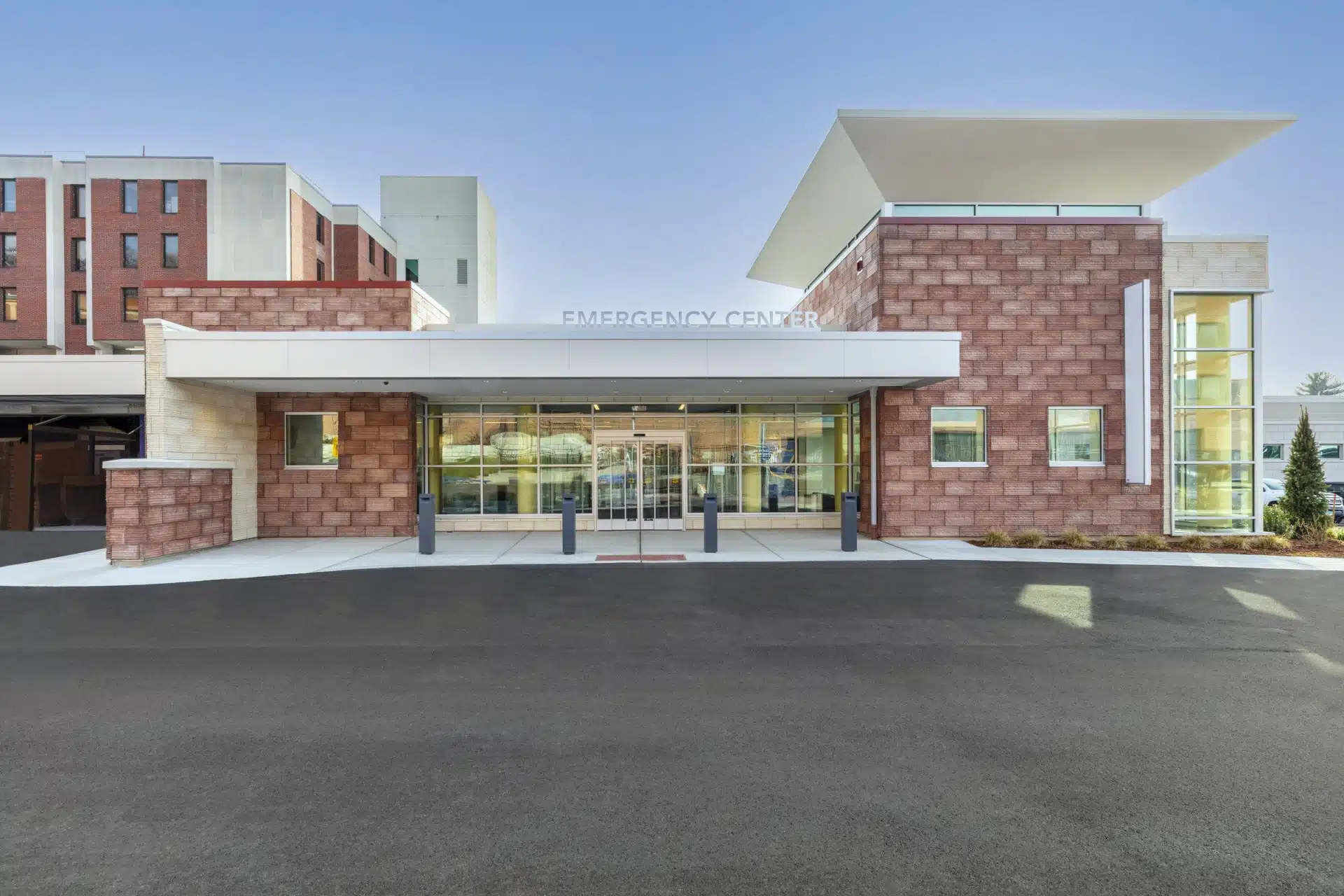
When designing for healthcare spaces, architecture is expected to do more than house care. Buildings are asked to support patient comfort, clinical outcomes, operational reliability, and long-term resilience. Within that context, the facade is no longer a passive exterior element, it functions as part of the care environment itself.
In a recent conversation, Chris Giovannielli, Director of Product Management, described how facade decisions in healthcare are increasingly shaped by the convergence of wellness priorities, performance requirements, and safety standards. His perspective reflects a reality many healthcare designers recognize, envelope decisions made early in design can influence how a facility performs for decades.
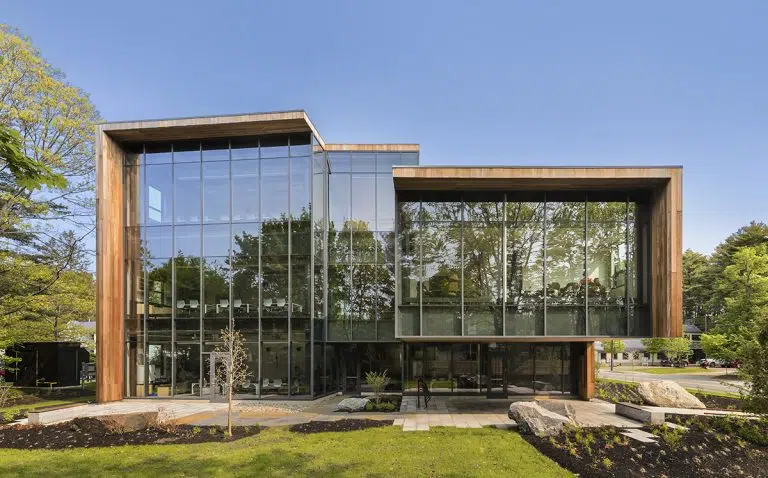
One of the clearest examples is the growing emphasis on natural daylight. Hospitals have increasingly embraced floor-to-ceiling glazing, open sight lines, and courtyards to support patient comfort and emotional well-being. Access to daylight and views can help patients feel oriented and connected to the outside world, an important counterbalance in clinical settings where stress and disorientation are common.
Yet daylighting alone is not the objective. In healthcare environments, daylight strategies must be carefully synchronized with thermal performance and environmental control. Large expanses of glass introduce complexity around heat transfer, glare, and interior comfort, particularly in facilities that operate continuously. The facade must mediate between openness and control, allowing daylight in while maintaining stable interior conditions.
Thermal performance becomes central in this balance. Limiting thermal transfer between exterior and interior environments supports occupant comfort, but it also affects the mechanical systems that serve the building. In hospitals, which are among most energy-intensive building types, thermal separation can influence HVAC sizing, operational efficiency, shaping long-term energy demand and the reducing the building’s operational carbon footprint. These considerations extend beyond sustainability metrics, they shape the reliability of spaces where equipment, staff, and patients depend on consistent conditions.
Alongside thermal performance, moisture control plays a uniquely critical role in healthcare settings. Giovannielli emphasized that condensation resistance is often a higher priority in hospitals than in commercial or residential buildings. Elevated humidity levels, frequent air turnover, and the presence of oxygen and medical equipment increase sensitivity to moisture at the building envelope.
When condensation is not adequately managed, moisture can accumulate at interior surfaces, compromising indoor environmental quality. In patient rooms, particularly those serving immunocompromised patients or spaces with elevated oxygen circulation, controlling moisture is not simply a consideration, it is tied directly to health and safety.
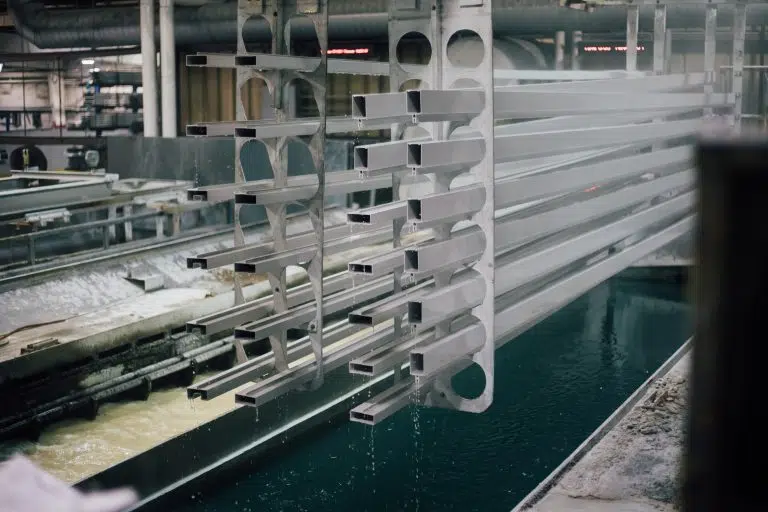
These performance demands often influence system selection across healthcare campuses. Large, vertically scaled hospitals or university medical centers frequently rely on unitized curtain wall systems, which are factory-assembled, glazed, and installed as modules. This approach can align with the scale and schedule demands of complex facilities while delivering consistent thermal and moisture performance.
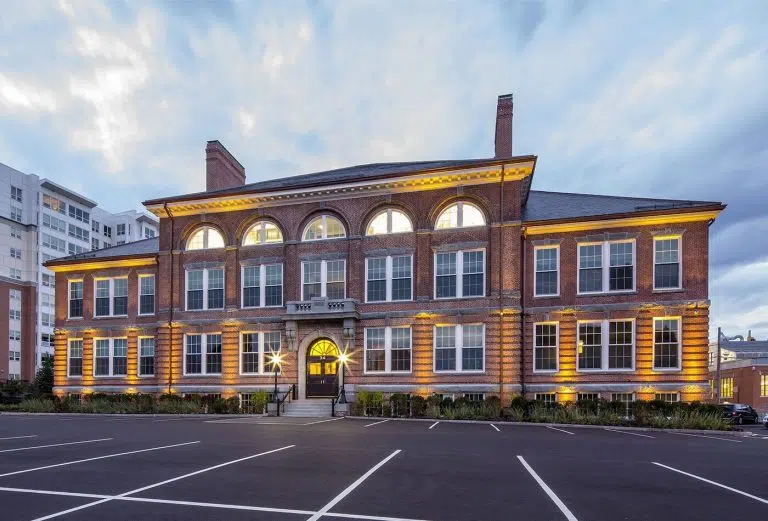
At the same time, many healthcare campuses include medical office buildings, outpatient facilities, or regional hospitals where stick-built curtain wall systems are more common. While fabrication and installation methods differ, designers often aim for visual and dimensional consistency across building types, maintaining similar sight lines, depths, and exterior rhythms to unify the campus.
Across a single healthcare network, facade strategies can vary significantly by building scale and functional need. Kawneer’s 2500 UT and 2500 UT PLUS Unitwall® systems support mid to high rise facilities through unitized construction that enables shop assembly, accelerated installation, and consistent performance delivery. In contrast, lower rise buildings often utilize stick-built curtain wall solutions such as Kawneer’s 1600 Wall System, where design flexibility and site-specific adaptation are priorities. Together, these approaches demonstrate how facade selection extends beyond aesthetics to align performance requirements, construction logistics, and long-term operational needs across diverse healthcare environments.
Safety and accessibility further complicate healthcare facade design. Hospitals and medical facilities must meet stringent accessibility requirements, including operating force standards for windows and doors. These requirements are highly context dependent. Patient rooms, behavioral health units, outpatient facilities, and support spaces may all demand different levels of impact resistance or operability. As a result, healthcare facades often require project-specific performance strategies rather than one-size-fits-all solutions.
Taken together, these factors illustrate why facade decisions in healthcare demand early, integrated thinking. Daylight, thermal control, condensation resistance, safety, and constructability are deeply interrelated. Addressing them in isolation increases risk, considering them as a unified design challenge strengthens outcomes.
For healthcare designers and specifiers, the facade has become a tool not just for expression, but for care delivery, supporting wellness, protecting vulnerable occupants, and enabling facilities to perform reliably over time.
Interested in seeing how these facade principles are applied in real healthcare environments?
Healthcare project examples
Healthcare market solutions
Facade performance resources


Photography: © Jeff Goldberg/Esto

Photography: © Ben Gancsos


Photography: © CJ Berg

Images courtesy of Bell County Glass Company, Inc.

Sign up to receive email updates on new product announcements, company news and more.